
Forget the Needle -- Build a Haystack

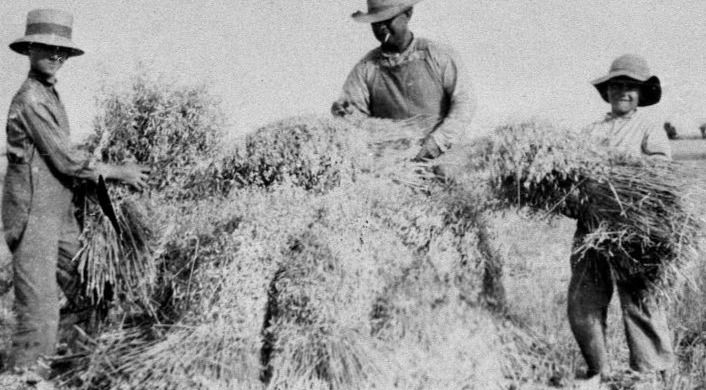
The breakthrough came when I stopped searching for breakthroughs.
After five months of analyzing the feasibility of a new venture studio in Abilene and designing a custom-fit structure to capitalize on our regional strengths, it was finally time to begin building awareness and support for The Paradox Lab. At the suggestion of 9point8 Collective, I organized a community kickoff event for mid-January 2026 and carefully curated an attendance list of potential founders, investors, and partners, as well as community leaders and local media.
The evening exceeded every expectation. Curiosity gave way to excitement as I shared my vision for a different future for innovation in Abilene, and the role The Paradox Lab could play in creating it. The next morning, I met with the 9point8 team for a strategic planning session to map out a plan to launch the studio by the end of May. After spending months out of my comfort zone as a student of the venture studio model, I was finally back in my element.
I spent a significant portion of my Air Force career creating and executing plans to meet specific objectives under difficult and stressful conditions, not only in the cockpit of a B‑1 but also in various headquarters from the Pentagon to Baghdad. I knew launching a venture studio would be difficult. I had consumed enough startup-related content to understand how hard it is to take a company from zero to one. And I was attempting to go from zero to one on an entirely different level, where the products I wanted to create were themselves startup ventures. Despite these challenges, I still thought I was ready for what was coming. I wasn’t.
Almost immediately, I encountered friction. Promising conversations with potential strategic partners would stall after the first meeting. A legal search I expected to complete in two weeks stretched into months because I wanted to find partners who not only understood the venture studio model and the unique legal requirements of an emerging venture fund, but also shared our commitment to building the studio in Abilene at a reasonable cost. Everywhere I turned, progress seemed slower than I expected. Finding people who were enthusiastic about the vision was easy. Finding people who were truly aligned with the studio's objectives, timeline, and design was much harder.
I had developed a high degree of conviction that not only would The Paradox Lab succeed in Abilene, but that it also was exactly what our community needed. I woke up every morning thinking about the studio, worked all day to push the launch plan forward, then fell asleep at night still thinking about it. It felt real to me even though it only existed in my imagination.
Any time someone pursues an ambitious vision, there is a gulf between conviction and traction. As the frictions accumulated for me, that gulf only widened, and opened the door for uncertainty and doubt to creep in. Many days, I would look at the guy in the mirror and ask, “Who do you think you are?” My greatest fear was that, after raising the expectations of my whole community, my vision would ultimately fizzle out, yielding nothing but disappointment. Every unanswered email, every delayed decision, every stalled conversation became another opportunity to wonder whether I had mistaken conviction for wishful thinking.
I became obsessed with finding the “needle in a haystack” that would finally prove the studio was real. Maybe the needle was finding the right venture concept. Maybe it was recruiting one exceptional founder. Maybe it was identifying one strategic partner who could unlock everything else.
The frustrating part wasn't that these efforts failed. Most of them actually worked. I met remarkable people. I developed promising relationships. The legal work eventually came together. Each conversation moved the studio forward in some small way. But none of them solved the larger problem. Every needle I found revealed three more that were missing.
Gradually, I stopped looking for the next needle and started paying closer attention to the haystack. The obstacles weren't random. They all seemed to point toward the same thing.
Relationships.
I had assumed the value of a venture studio came from repeatedly finding extraordinary founders, extraordinary technologies, or extraordinary venture ideas. Instead, I was slowly discovering that the true value of a venture studio emerges from making connections. Every promising founder needed customers. Every promising technology needed founders. Every strategic partner opened doors to other partners. Progress wasn't bottlenecked by one missing opportunity. It was limited by the strength of the relationships surrounding it.
The answer wasn't to become better at finding needles. It was to build a better haystack.
Around that same time, the team at 9point8 was developing what they called a venture-building ontology, a systematic way to understand and map the relationships across an innovation ecosystem. Neal Ghosh, Evan Allen, and JT Benton weren't simply building software. They were developing a new way to think about venture creation itself. At first, I saw it as an elegant technical architecture. Gradually, I realized they were giving language to something I had only begun to understand.
The breakthrough came when I realized I had been asking the wrong question. Instead of asking, "What's the next company we should build?" I found myself asking, "Where do venture-grade companies actually come from?"
Looking back, I'm grateful the first months of building The Paradox Lab were more difficult than I expected. I assumed uncertainty meant something had gone wrong. Instead, I’ve learned that uncertainty is evidence that I need to ask better questions.
Those questions – and the framework the 9point8 team was developing to answer them – fundamentally changed how I thought about the work of a venture studio. More importantly, they changed my understanding of the source of its value.


Comments